Factors Influencing Human Acceptance of Anthropomorphic Robots
by MetroForm Studio
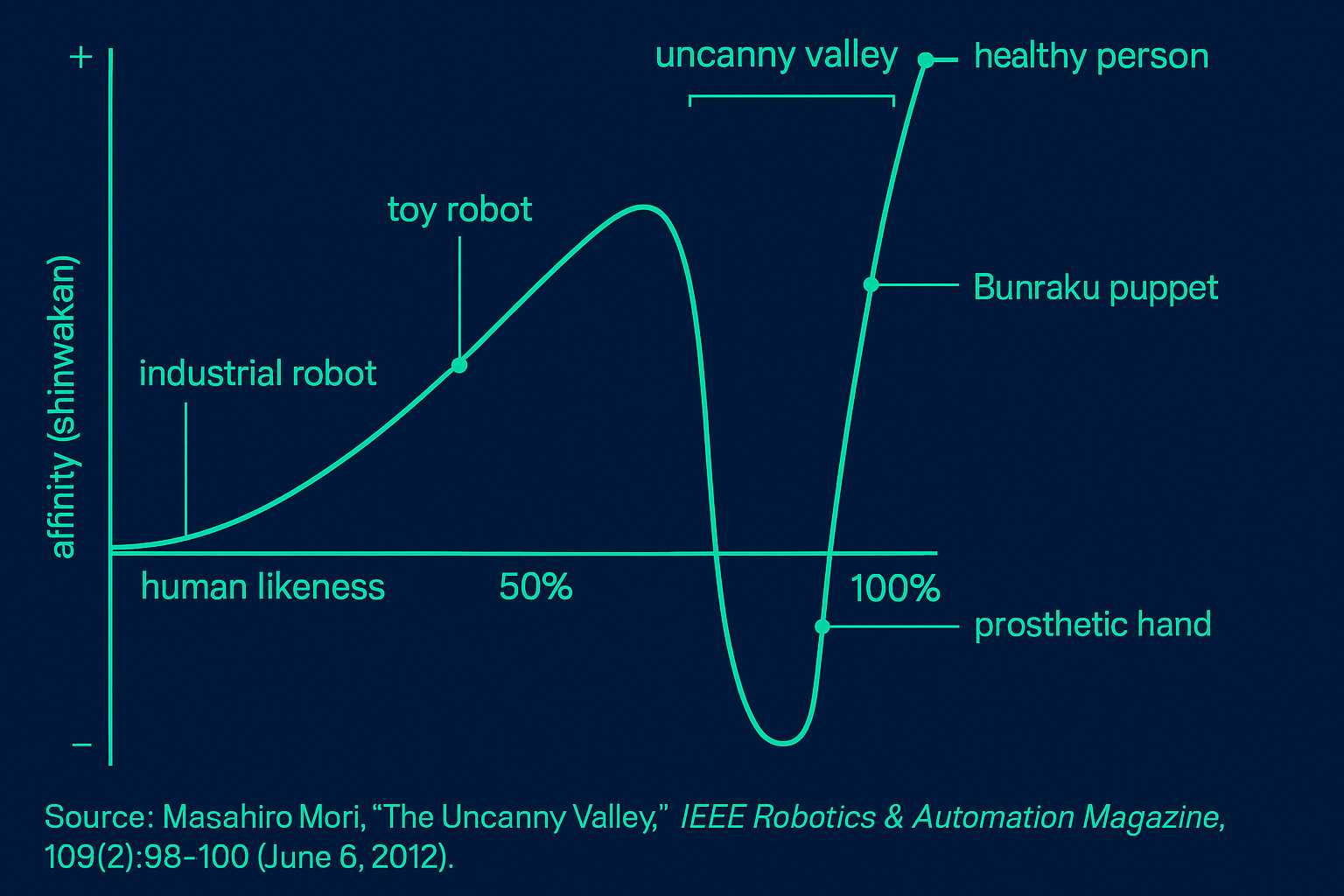
The uncanny valley, a concept first articulated by roboticist Masahiro Mori in 1970, describes a distinct and often problematic dip in human affinity towards artificial entities as they approach, but do not perfectly achieve, human-likeness. Mori's hypothesis posits that as a robot's appearance and movement become more human-like, our sense of familiarity and comfort generally increases. However, at a point of very high, yet imperfect, resemblance, this positive correlation abruptly reverses, and the robot is perceived as eerie, unsettling, or even repulsive. Should the robot achieve a level of human-likeness indistinguishable from an actual human, affinity is theorized to rise again, moving out of this "valley" of discomfort.
The significance of the uncanny valley in HRI cannot be overstated. It represents a substantial psychological barrier to the widespread acceptance and effective integration of social robots, particularly those designed with hyper-realistic features. If a robot inadvertently falls into this valley, it can undermine user trust, reduce willingness to interact, and negate the intended benefits of its social capabilities. The challenges in overcoming the uncanny valley are multifaceted. The phenomenon is often attributed to cognitive dissonance arising from perceived mismatches between a robot's human-like appearance and its imperfect or non-human-like behavior, movement, or responsiveness. Other potential triggers include violations of ingrained social norms, perceived threats to human identity or uniqueness, or an innate aversion to entities that subtly deviate from expected human forms, possibly linked to evolutionary mechanisms for disease avoidance or mate selection. Understanding and predicting the precise combination of features that triggers this effect remains a complex endeavor due to the intricate and often subjective nature of human perception.
Personally, I'm not a fan of this classic visual representation. Instead, I offer an alternate perspective on the uncanny valley, easier to understand, visualized through a double bar model, where two key dimensions—Appearance and Behaviour/Movement—are represented as percentages on separate bars. For a robot to avoid the uncanny valley, these two dimensions should be closely aligned. For instance, a robot with a moderately human-like appearance (e.g., 40% on the Appearance bar) should exhibit similarly moderate human-like behavior and movement (around 40%) to maintain perceptual harmony. Significant disparities between these dimensions—such as a highly realistic appearance paired with mechanical, jerky movements—can trigger discomfort, as the mismatch creates an unsettling cognitive dissonance.
Appearance
40%
Behaviour/Movement
40%
C-3PO is an great example of balanced humanoid robot
Key Determinants in Bridging or Mitigating the Valley
Research has identified several key determinants that influence whether a humanoid robot is perceived positively or falls into the uncanny valley. These broadly relate to its physical appearance, movement dynamics, and overall behavioral realism.
1. The Impact of Physical Appearance and Human-Likeness
The degree of a robot's physical resemblance to a human is a foundational element in uncanny valley discussions. While the general principle holds that increasing human-likeness can initially enhance appeal, designs that are highly anthropomorphic but contain subtle flaws or inconsistencies are at high risk of inducing the uncanny effect. This suggests a delicate balance is required.
Some studies propose that moderate anthropomorphism—a stylized, clearly robotic, or even cartoon-like appearance—might be perceived more favorably as it avoids setting up expectations of perfect human fidelity that are difficult to meet. Simplified facial features, for instance, can make a robot appear relatable and approachable without evoking the discomfort associated with near-perfect but flawed human mimicry. However, the landscape of preferences is not uniform. One study indicated a preference for a tutor robot with a mix of mechanical and humanlike features, while another found an aversion to highly humanlike robots, attributing them as deficient, highlighting a potential "moral uncanny valley effect." This variability underscores the complexity and context-dependency of appearance preferences.
The type of stimuli used in research also matters. Early uncanny valley studies often relied on static images or short video clips. More recent interactive studies, however, reveal that perceptions of human-likeness can be dynamic and subject to change based on the interaction experience itself. For example, research involving the robots EMAH and ROMAN showed that participants' post-study perceptions of their human-likeness shifted significantly after engaging in interactions, suggesting an active re-evaluation process influenced by the robots' behavior and responsiveness. This dynamic aspect implies that initial impressions based on appearance are not immutable and can be positively or negatively modulated by the quality of the interaction.
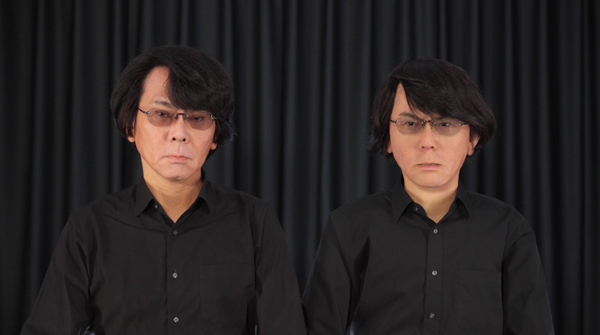
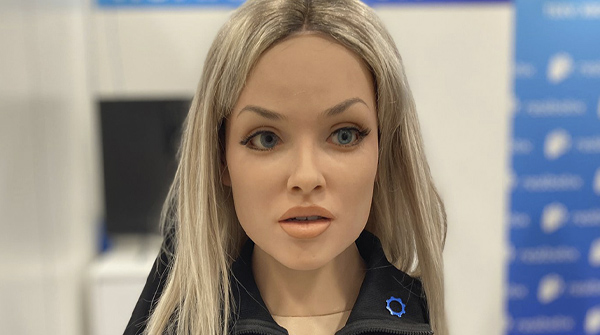
Consider a humanoid robot designed with a highly realistic appearance, such as lifelike silicone skin and a high-quality wig, achieving an Appearance score of approximately 90%. However, if its movements remain mechanical and jerky—akin to those observed in some advanced androids like those developed by Hiroshi Ishiguro’s laboratory—its Behaviour/Movement score might only reach 20-30%. This significant gap, as visualized in the double bar model below, often results in visual discomfort, as the robot’s lifelike exterior sets high expectations that its movements fail to meet. Despite impressive static appearances, interviews with such androids reveal persistent jerkiness, showing little improvement over the past decade and highlighting an industry focus on external appearance over movement dynamics.
Appearance
90%
Behaviour/Movement
25%
Hiroshi Ishiguro and the latest version of his android.
2. The Critical Role of Movement Dynamics
Movement is a powerful cue in human perception, and for robots, I believe it is often as, if not more, critical than static appearance in determining acceptance and avoiding the uncanny valley. Fluidity, synchronization, and naturalness of motion are paramount. Smooth, fluid movements that convincingly mimic human body language—without appearing exaggerated or caricatured—are consistently associated with increased acceptance and reduced eeriness. Conversely, movements that are delayed, rigid, jerky, or overtly mechanical are potent triggers for the uncanny valley, creating a sense of artificiality and unease.
The synchronization of various body motions, especially in complex humanoid forms, is a significant engineering challenge but essential for a cohesive and human-like presentation. When different parts of the robot move in a disjointed or uncoordinated manner, it breaks the illusion of organic movement and can be highly unsettling. Prior research has indeed suggested that the quality of movement, even when observed in non-interactive formats like GIFs or videos, is crucial for reducing eeriness.
Addressing the specific interest in micro-movements, fidgeting, and subtle gestures, the literature offers some pertinent, albeit not always direct, insights. Human faces, for example, convey a wealth of information through dynamic changes such as eye blinking and subtle "muscular micro-movements". The ability of a robot to replicate these with high fidelity is crucial for realistic emotional expression. However, subtle inconsistencies in these very micro-expressions or small gestures can appear profoundly unnatural and act as strong uncanny triggers. This suggests a double-edged sword: well-executed micro-movements could enhance realism and "aliveness," but poorly executed ones, especially on a highly realistic face, can be more detrimental than their absence. Researchers are using AI-driven facial expression analysis to detect human micro-expressions of discomfort when interacting with robots that fall into the uncanny valley, underscoring the perceptual impact of these subtle cues. Aligning a robot's micro-expressions with human social expectations is therefore recommended to maintain trust and avoid unease.
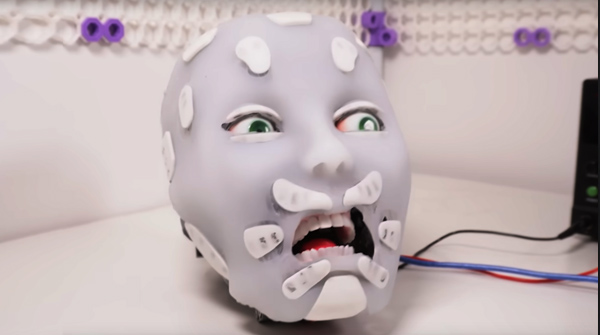
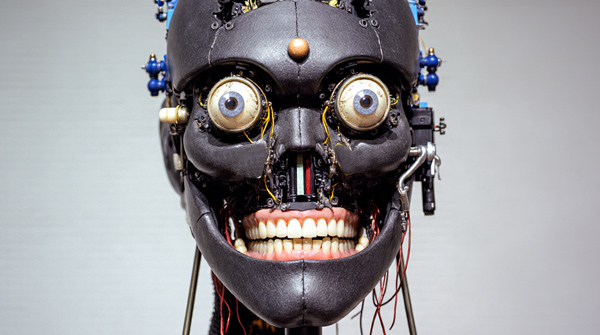
Interestingly, the uncanny valley can also manifest in the opposite scenario, where a robot’s Behaviour/Movement is significantly more human-like than its Appearance. For example, a robotic head with a clearly mechanical exterior (e.g., 30-40% Appearance) but equipped with highly realistic eye movements, blinking, and facial expressions driven by precise motors (e.g., 80% Behaviour/Movement) can evoke unease. This discrepancy creates a perception that the robot is unnaturally animated or "possessed," as its lifelike movements contrast sharply with its artificial appearance. The double bar model below illustrates this reverse uncanny valley effect, emphasizing the importance of alignment between appearance and behavior.
Appearance
40%
Behaviour/Movement
75%
Android face with realistic eye movement and expressions.
While "subtle gestures" and "micro-expressions" are frequently discussed in the context of emotional signaling and natural interaction, dedicated experimental studies focusing specifically on the impact of non-functional fidgeting or idle animations as a means to mitigate the uncanny valley are less prominent in the available research. General findings indicate that interaction, which inherently includes movement, can affect perceptions of uncanniness, but the precise role of these very subtle, ambient motions remains an area ripe for further investigation. The underlying principle appears to be that any movement, micro or macro, must contribute to a congruent and naturalistic overall impression.
3. Behavioral Realism: Contingency, Social Cues, and Emotional Expression
Beyond physical form and basic movement, a robot's broader behavioral repertoire plays a significant role. Contingent behavior, or the robot's ability to respond meaningfully and in a timely manner to a human's actions and utterances, is fundamental to creating a sense of genuine interaction. One study involving young children and the robot Keepon found that participants altered their behaviors based on whether the robot's actions were contingent upon their own. Interestingly, there was an initial hesitation to interact with the contingently behaving robot, which the researchers interpreted as a possible uncanny valley effect arising from a conflict: the robot had a non-humanlike appearance but exhibited humanlike contingent actions. This highlights that contingency alone is not a panacea; it must align with other perceptual cues to be effective. If a robot looks like a machine but behaves with sophisticated social contingency, this mismatch can itself be unsettling, at least initially.
The transparency and appropriateness of social cues are also critical. Humans expect social agents to display a range of behaviors that are fluid, affective, intuitive, and natural. Mismatched expressions and emotions—for example, a robot's facial expression or vocal tone not aligning with the conversational context or its own verbal content—can create significant discomfort and push it into the uncanny valley.
Emotional expression by the robot is another key aspect. Robots that can convincingly depict emotional states, and particularly those that exhibit emotional stability, tend to reduce feelings of eeriness in observers. The ability to express emotions appropriately can enhance acceptance and diminish aspects of the uncanny valley. However, the realism of these expressions is paramount. Limitations in a robot's physical design, such as the texture of its skin or the number of degrees of freedom (DOF) in its facial mechanics, can lead to inadequate or unnatural-looking emotional displays, which can be worse than no emotional display at all. For instance, if a robot attempts a smile but its mechanics only produce a grimace, the effect is often negative.
4. Conversational Capabilities and Perceived Understanding
A robot's ability to communicate effectively and demonstrate understanding is increasingly recognized as a powerful factor in mitigating the uncanny valley. Recent advancements, particularly the integration of Large Language Models (LLMs), have shown significant promise. A study involving Nadine, a hyper-realistic humanoid robot, found that equipping it with LLM-driven communication skills significantly reduced feelings of eeriness among participants while fostering more natural and engaging conversations.
In this context, conversational naturalness and the robot's ability to maintain user interest emerged as key drivers of users' willingness to engage further. Notably, these factors appeared to be more critical than the robot's sheer human-like qualities in determining positive interaction outcomes. This suggests that if a robot can converse intelligently and engagingly, users may be more forgiving of minor imperfections in its appearance or movement. This directly relates to the notion of a robot "sensing" the person it is interacting with; LLMs contribute to this by enabling more coherent, contextually relevant, and seemingly insightful dialogue, making the robot appear more understanding and less like a pre-programmed automaton. A preference for robots capable of advanced communication has also been noted in other research. This perceived intelligence can shift the user's focus from aesthetic or motor flaws to the quality of the interaction itself, thereby enhancing the perceived "aliveness" of the robot in a functional, rather than purely imitative, sense.
Synthesizing the Evidence: Is Movement More Potent Than Appearance?
The question of whether movement dynamics are more influential than static physical appearance in shaping human perception of robots and mitigating the uncanny valley is central to this investigation. The evidence suggests a complex interplay, but with a growing indication that behavior, which encompasses movement, emotional expression, and conversation, can indeed be more powerful than appearance alone, especially within interactive contexts. One study explicitly concluded that if a robot's appearance and behavior are contradictory, its behavior tends to predominate over its appearance in how humans perceive it as machine-like or human-like.
Our observations suggest that many robotics companies, such as those in Hiroshi Ishiguro’s laboratory, prioritize achieving a hyper-realistic external appearance while often neglecting the critical role of movement dynamics. Despite advancements in creating lifelike exteriors, such as realistic silicone skin and high-quality wigs, the movement of these androids often remains mechanical and jerky, lagging significantly behind. This focus on appearance over behavior exacerbates the uncanny valley effect, as the high expectations set by a near-human exterior are unmet by subpar movement quality, leading to a jarring user experience.
Furthermore, the perception of the uncanny valley is not a static judgment. Initial impressions based on a robot's appearance can be significantly altered through interaction. Repeated, positive interactions have been shown to reduce feelings of eeriness over time. This dynamic nature underscores the importance of a robot's interactive capabilities.
However, the most critical factor often appears to be congruence—or the harmonious alignment—between a robot's appearance, its movement quality, and its overall behavior. A highly realistic physical appearance sets correspondingly high expectations for behavioral and movement fidelity. Any imperfections in movement or social behavior on a very human-like robot are likely to be more jarring and noticeable than similar imperfections on a robot with a more overtly mechanical or stylized appearance. This leads to what might be termed an "expectation-congruence" hypothesis for the uncanny valley: the discomfort arises not just from a deviation from perfect human-likeness on any single dimension, but from a salient mismatch between the level of human-likeness cued by one aspect (e.g., a photorealistic face) and the level delivered by another (e.g., slightly jerky movements or stilted speech).
Therefore, bridging the uncanny valley may not be about maximizing human-likeness on all fronts simultaneously—a task of immense difficulty—but rather about achieving a consistent and congruent level of human-likeness across all perceivable modalities. A robot that is moderately anthropomorphic in its appearance, but exhibits correspondingly natural and fluid movements and engaging, coherent behaviors, might be better received than a robot that is hyper-realistic in appearance but suffers from noticeable flaws in its dynamic performance.
Revisiting the initial hypothesis that human-like movements, particularly small gestures, are more important in bridging the uncanny valley than perfect external resemblance, the evidence offers partial support. High-quality, naturalistic movement and behavior can indeed compensate for a less-than-perfectly human exterior. If a robot with a "less refined exterior" exhibits "better/more fluent movement" and "more human-like micro-movements or fidgeting" that are well-executed and congruent with its overall persona, it may well be perceived more positively than a robot with a "perfect external resemblance" but flawed or incongruent dynamics. The crucial caveat is that these "small gestures mimicking human ones" must be executed with a high degree of naturalism and appropriateness. If a robot possesses a highly refined, human-like exterior, then the fidelity of these micro-movements and subtle expressions becomes even more critical, as any imperfections will be highly salient against the backdrop of otherwise high realism.
The Case of Anthropomorphic Animal Robots
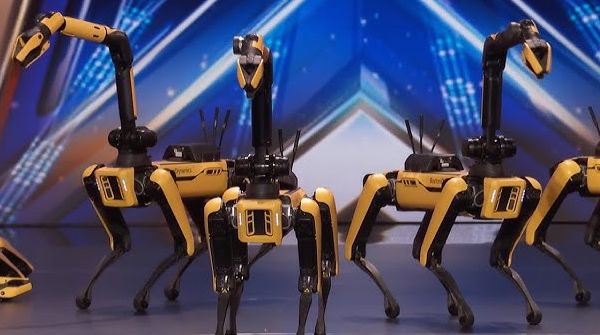
Interestingly, the uncanny valley effect appears to be less pronounced or absent in anthropomorphic animal robots, such as robotic dogs. For example, the original AIBO by Sony, with a clearly mechanical appearance and basic movements (both rated at approximately 30% on the double bar model), does not evoke discomfort despite its low human-likeness. Similarly, more advanced robotic dogs, such as those from Boston Dynamics, which perform complex routines like dancing or bowing on shows like America’s Got Talent, maintain appeal despite a gap between their Appearance (around 30%) and Behaviour/Movement (around 50-60%). Audiences respond positively, cheering and clapping, suggesting that the uncanny valley effect is not triggered in these cases.
Appearance
30%
Behaviour/Movement
55%
Boston Dynamics' dogs performance
This exception may stem from lower expectations for animal-like robots compared to human-like ones. Humans may not hold animal robots to the same strict standards of congruence, as their behaviors—whether mechanical or advanced—are not judged against the complex social and emotional benchmarks of human interaction. Additionally, the playful or novel nature of animal robot movements, such as dancing or bowing, may enhance their charm, overriding any potential discomfort from appearance-behavior mismatches. This observation suggests that the uncanny valley is a phenomenon more closely tied to human-like robots, where expectations of human fidelity amplify sensitivity to incongruence.
Key Factors Influencing the Uncanny Valley
Factor
Brief Description
Impact on Uncanny Valley
Appearance: High Human-Likeness
Robot designed to look almost identical to a human.
Can exacerbate if imperfections exist; high risk of UV.
Appearance: Moderate/Stylized Anthropomorphism
Robot has human-like features but is clearly artificial or cartoon-like.
Can mitigate by avoiding high expectations of fidelity.
Movement: Fluidity/Naturalness
Smooth, coordinated, and biologically plausible motions.
Mitigates; crucial for acceptance.
Movement: Rigidity/Delay/Inconsistency
Jerky, slow, or uncoordinated movements; subtle deviations from natural human motion.
Exacerbates; strong UV trigger.
Movement: Micro-Gestures/Expressions
Subtle facial movements, eye blinks, small non-verbal cues.
Can mitigate if highly realistic and congruent; can exacerbate if flawed or mismatched.
Behavior: Contingency
Robot responds appropriately and timely to human actions/speech.
Can mitigate, but must be congruent with appearance.
Behavior: Emotional Expression
Robot displays emotions through face, voice, posture.
Can mitigate if realistic and context-appropriate; can exacerbate if poorly executed or mismatched.
Behavior: Conversational Naturalness
Robot engages in coherent, engaging, and seemingly understanding dialogue (e.g., via LLMs).
Evaluate Your Perception: This simple quiz allows you to evaluate different android designs and rate your perception of uneasiness. Each example represents different combinations of appearance, movement, and behavior characteristics discussed in this study. At the end, see a summary of your responses and how they align with uncanny valley factors.
Android 1: Hyper-Realistic Humanoid
Highly human-like appearance with subtle flaws in facial texture, but visible jerky arm movements, limited emotional expression and unable to maintain eye contact.
Android 2: Stylized Humanoid
Cartoon-like appearance but with smooth, fluid movements and responsive, natural conversation powered by custom LLMs.
Android 3: Mechanical Humanoid
Overtly robotic appearance with rigid, mechanical movements but highly contingent and emotionally expressive behavior.
Android 4: Mechanical with Exaggerated Human Features
Very mechanical appearance with exaggerated human-like eyes, lips, and nose, paired with stiff, robotic movements and minimal emotional expression.
Android 5: Visible Mechanics with Lifelike Micro-Movements
Visible mechanics and motors driving artificial skin, but with extremely lifelike head movement, eye movement, and micro-movements, and moderately responsive conversation.